The Boston Public Library has made more than 8,000 photos, ranging from pictures documenting the construction of the McKim library building in Copley Square to 19th-century daguerreotypes, publicly available on Wikimedia Commons, according to library officials.
Month: January 2021
-
Making Adjustments to Keep Learning Going
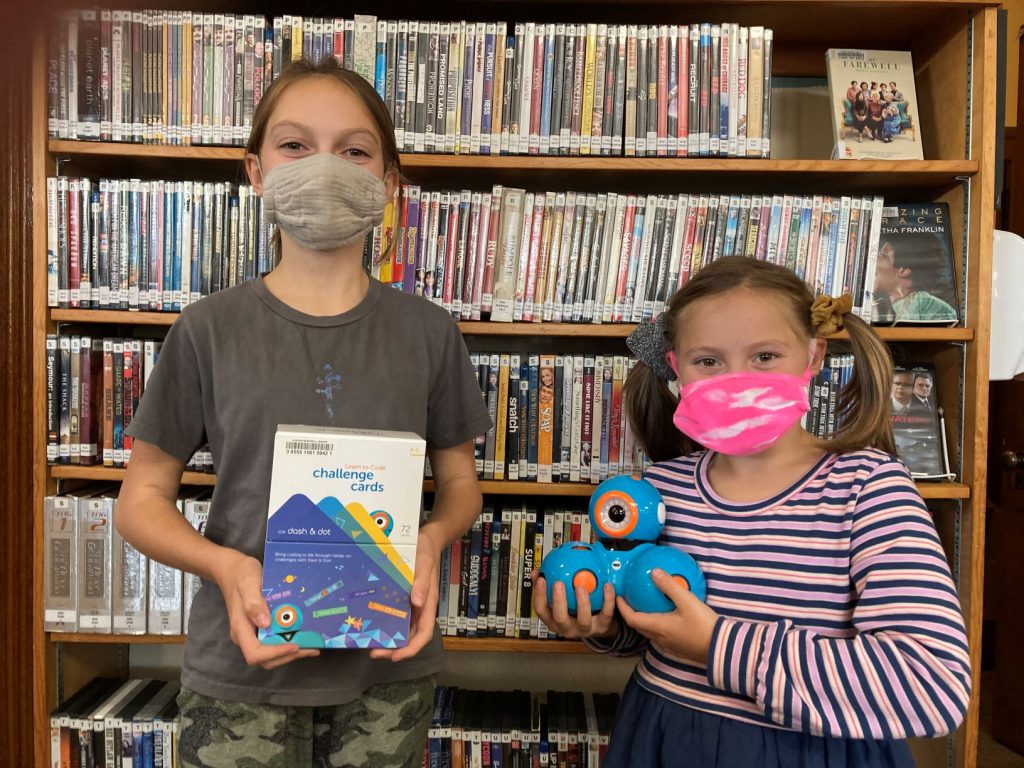
Library users borrow the robots Dot and Dash to take home and learn to code with. Originally an in person program, the Porter Memorial Library in Blandford adjusted it in response to the COVID-19 pandemic. The MBLC’s Summer Learning grants began in 2019 as a way for public libraries to offer more out of school learning opportunities during one of their busiest times of year. The thirteen grant recipients for 2020 had some amazing plans for this summer that were derailed by the pandemic. After taking some time to figure out a plan B, these libraries used their grant to adapt to the new needs of their communities in a variety of thoughtful ways.
Libraries are a key provider for out of school learning. With so much of life is taking place virtually, there was a real desire for activities that were offline and hands-on. Randall Library in Stow reallocated grant funds to offer circulating educational backpacks. The backpack themes included music, math, reading readiness, and storytelling/sequencing. Caregivers mentioned how helpful the backpacks were in engaging young children in learning and the benefit of being able to provide something educational that does not require a lot of effort or creativity on their part. Supporting families’ efforts in providing educational experiences for early learners has become even more critical as the pandemic has continued.
With in-person gathering out of consideration, libraries had to rethink the hands-on programming they had originally intended to have. Porter Memorial Library in Blandford switched their planned robotics program into a circulating robotics collection. This allowed participants to have a week to learn coding with a robot. Feedback indicated the longer time frame with the robots results in a greater depth of understanding as well as strong intergenerational learning. It also provided the opportunity for participants who may not have been able to make a specific program time the ability to use the robots. This kind of flexible thinking allowed the community to continue to experience the benefits of the library from the comfort of their own home.
Many grant recipients moved their programming online. Library virtual programs provided important connections for members of their community. A library user at the Jones Library in Amherst shared “In the height of quarantine, your program gave my son something to look forward to. Time learning was something he has always been interested in and interacting with kids his age on the other end was a game changer for him. Your first meeting was the first time in weeks that I saw him smiling. This time is particularly hard on teens and tweens.” The value of social connections has become increasingly apparent during the pandemic. Libraries have continued to provide opportunities for connection, with particularly effort made to reach at-risk populations, such as teens.
With some creativity and a lot of commitment, this year’s grant recipients were able to provide a variety of learning opportunities that worked for their individual community. While summer looked a lot different this year, libraries helped provide a much-needed bright spot for those that needed it.
-
Children’s librarian Kay Lyons to retire: ‘I found I had a way with children’
Librarian Kay Lyons has journeyed with local children for almost three decades to places like Wonderland, Narnia and Hogwarts School of Witchcraft and Wizardry, but when she retires in March, it’s her turn. She and her husband, Rick Roy, will take some trips of their own, though never forgetting the joy she’s known.
-
Plymouth Public Library Director Jennifer Harris retiring
After nearly three decades of service to the town, the director of the Plymouth Public Library is moving on.
But Jennifer Harris will continue to work in support of libraries in retirement and may get even more involved in local government.
-
Library Space During the Pandemic and Beyond

By Lauren Stara and Andrea Bunker, Library Building Specialists at the MBLC
Libraries all over the world are striving to satisfy the needs of their patrons during this pandemic, some in buildings and spaces that were inadequate prior to these unprecedented times. The staff of the Massachusetts Public Library Construction Program have been working to help librarians navigate their physical space needs and address pandemic related changes that may continue beyond these difficult times.
Last month, in collaboration with Sasaki, we released Library Space: A Planning Resource for Librarians, a planning tool that creates a formal set of best practices for designing library space that may be applied to libraries across the nation. The guide empowers librarians, administrators, space planners, and architects with tools for the planning and design of public library buildings. Early in December, we added a 4-page Pandemic Addendum, which aims to capture the knowledge and lessons learned from experts and practitioners who have been in the trenches of pandemic library services.
On December 10, 2020, we held a virtual “guided tour” of the document, to introduce the concepts and answer questions. We had representation from all types of libraries, – public, academic, and special, and librarians participated from all over the country, including from Georgia, Oregon, and Hawaii. The questions were thought-provoking, and many were focused on the Pandemic Addendum – not surprising since we’re all focused on the potential for lasting changes in the wake of COVID-19.
The core tenet of the main document, though, holds true in the addendum as well: planning with flexibility in mind.
Library services are changing and evolving at an astonishing rate, and bricks-and-mortar buildings are often not designed to keep up. This reality was spotlighted in 2020, as library buildings closed and later reopened with limited services and often jury-rigged barriers and pathways. Librarians improvised quarantine procedures for collections and figured out how to circulate materials with as little physical contact as possible. While we know the pandemic will end, we predict there are some services and considerations that will continue indefinitely:
- Curbside is here to stay: It’s so convenient for patrons that we don’t think the public will let us stop it. We need to modify or plan new buildings to accommodate amenities such as outdoor pickup lockers and walk-up or drive-through service points.
- Outdoor programming: We need to maximize the potential for activities that take advantage of fresh air when weather permits. Even in bad weather, an outdoor area with a roof and/or portable exterior heaters can work for library services just as well as for restaurants.
- Attention to HVAC and indoor air quality: Virus transmission is enabled by stagnant indoor air. We think new and renovated buildings will pay much closer attention to the design of their mechanical systems, and existing buildings should assess and upgrade their ventilation and filtration where possible.
- Furniture choices: While we look to hospital-grade furniture now, we think there will be a revolution in materials for furniture in the next few years, to increase the ability to clean and disinfect easily.
Many aspects of library design will remain the same, regardless of these extraordinary circumstances. Please visit the MBLC’s website to download both the main pdf and the Pandemic Addendum, or to view Library Space via ISSUU.